

Australians Generate 20kg of E-Waste Each. Aussie Battery Says Bad Fitment Data Is Part of Why
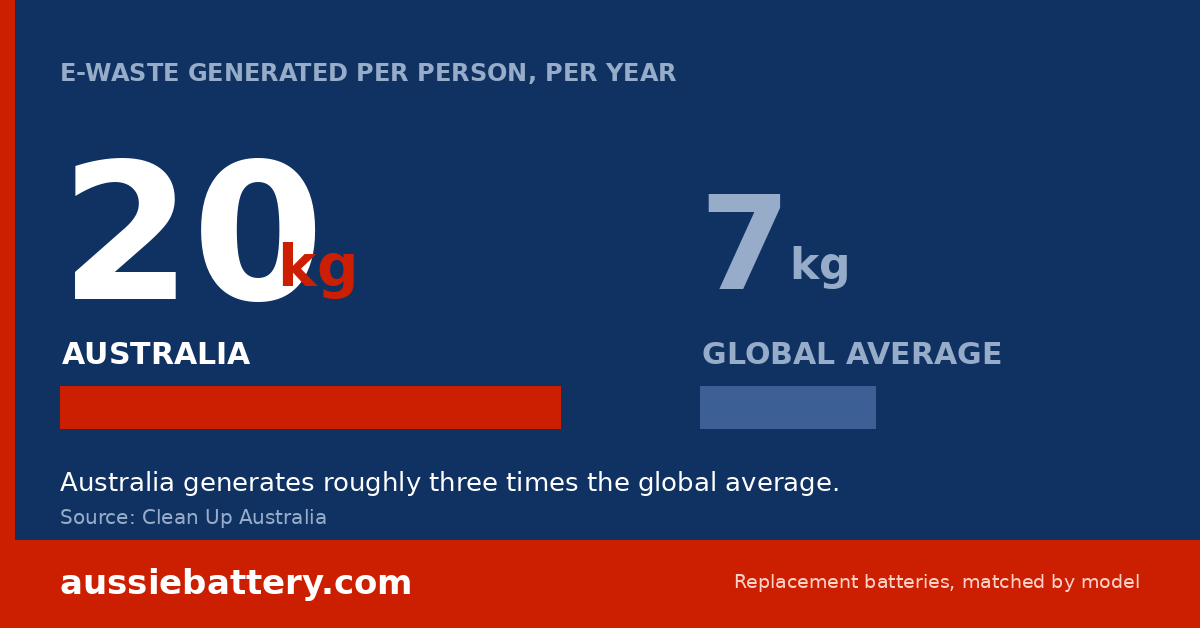
20kg of e-waste is generated per person in Australia
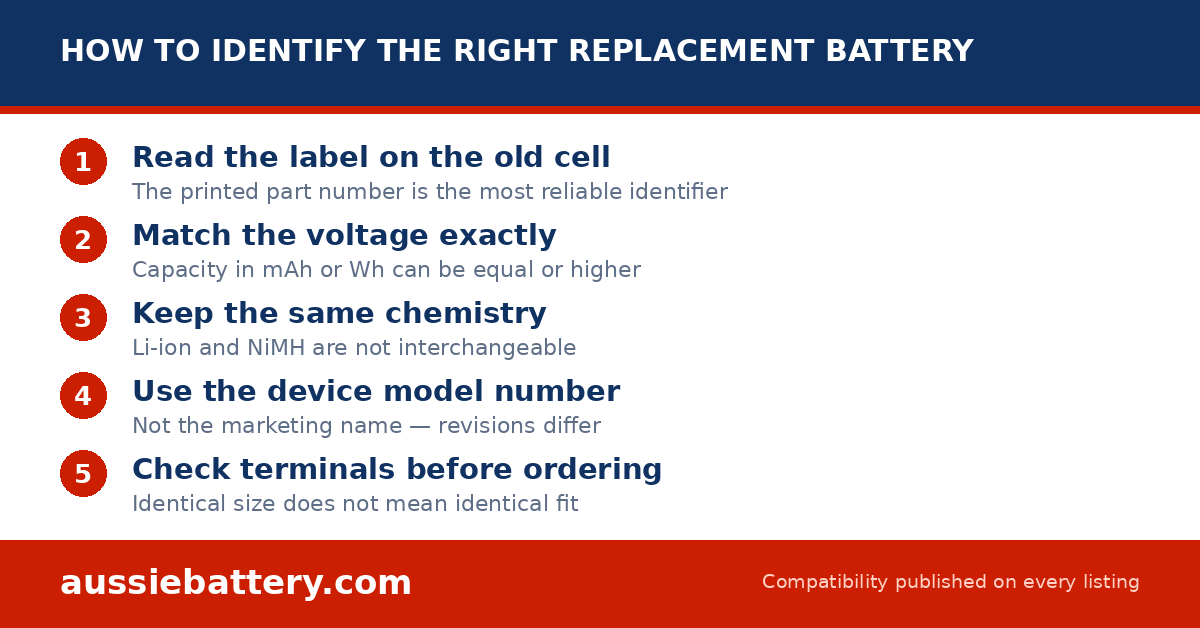
How to identify the right replacement battery
The Australian retailer publishes part numbers, device-model compatibility and electrical specifications on every listing
SYDNEY, NSW, AUSTRALIA, August 7, 2026 /EINPresswire.com/ -- Aussiebattery.com, an Australian online supplier of replacement batteries, publishes model-level compatibility information against every product it lists, allowing buyers to confirm a battery fits their specific device before they order rather than after it arrives.
The company's position is that the replacement battery market has an information problem more than a supply problem. Batteries are widely available. Knowing which one is correct is the difficult part, and it is the step where most purchases go wrong.
Why replacement batteries are unusually easy to get wrong
Several things conspire against a buyer. The part number that actually identifies a battery is printed on the cell itself, which means it cannot be read without opening the device or removing the battery, a step many people skip. Devices sold under one consumer-facing name are frequently manufactured in several hardware revisions that take different cells, so matching the name on the box is not sufficient. Listings advertised as universal or as fitting an entire product family often fit only part of it. And two batteries can share identical external dimensions while differing in voltage, terminal layout or cell chemistry, which makes visual matching unreliable.
The consequence is a purchase that does not fit. Sometimes that ends in a return. Often it ends worse: the owner concludes the device itself has failed, and replaces equipment that was working apart from a consumable part.
That outcome has a measurable cost. According to Clean Up Australia, Australia generated 511,000 tonnes of electronic waste in 2019, roughly 20 kilograms per person, against a global average of about 7 kilograms. With the national figure projected to rise close to 30 percent by 2030. Batteries are among the most common reasons otherwise functional equipment is retired early, because they are the component most likely to degrade first and the one buyers are least equipped to source correctly.
"The catalogue size is not really the point. Anyone can list ten thousand batteries," said Timothy, Owner at aussiebattery.com. "What decides whether a customer keeps their device or replaces it is whether they can work out, in under a minute, which battery actually fits. That is a data problem, and it is the part of this business we spend the most time on."
How the catalogue is structured
Each listing on aussiebattery.com carries the part numbers the battery replaces, the device models it is compatible with, and its electrical specifications, voltage, capacity and cell chemistry. Compatibility is recorded against individual device models rather than against broad product families, on the basis that family-level matching is where most incorrect purchases originate.
Products are organised both by device category and by model, so a customer can arrive from either direction: knowing the part number stamped on their old battery, or knowing only what device they own. Where a single battery serves multiple models, every one of those models is listed rather than summarised.
How to identify the right replacement battery
The company suggests a short sequence that resolves most cases:
Remove the existing battery and read the label. The alphanumeric part number printed on the cell is the single most reliable identifier. Photograph it rather than transcribing it, the characters are small and easily confused.
Record the voltage and capacity. Voltage must match the original. Capacity, given in mAh or Wh, can match or exceed it; a higher-capacity cell of the same voltage generally provides longer runtime without affecting compatibility.
Check the chemistry. Lithium-ion and nickel-metal-hydride cells are not interchangeable, and substituting one for the other can be unsafe with the original charger even where the battery physically fits.
Find the device's model number, not its marketing name. This is usually on a label on the base of the device or inside the battery compartment, and it is what distinguishes hardware revisions from one another.
Match on the part number first. Cross-check it against a listing's stated compatibility rather than relying on the device name alone, and confirm the terminal position and connector type visually before ordering.
"Most people assume a battery that won't hold charge means the device is finished," said Timothy. "In the majority of cases it means one consumable part is finished. The gap between those two conclusions is worth a lot, to the customer's budget, and to how much equipment ends up in landfill."
The full range is available at aussiebattery.com, with compatibility details published on each product listing.
Tim
AussieBattery
cs@aussiebattery.com
Visit us on social media:
Instagram
Legal Disclaimer:
EIN Presswire provides this news content "as is" without warranty of any kind. We do not accept any responsibility or liability for the accuracy, content, images, videos, licenses, completeness, legality, or reliability of the information contained in this article. If you have any complaints or copyright issues related to this article, kindly contact the author above.
