

Survey Reveals the Defunct Brands Americans Miss Most
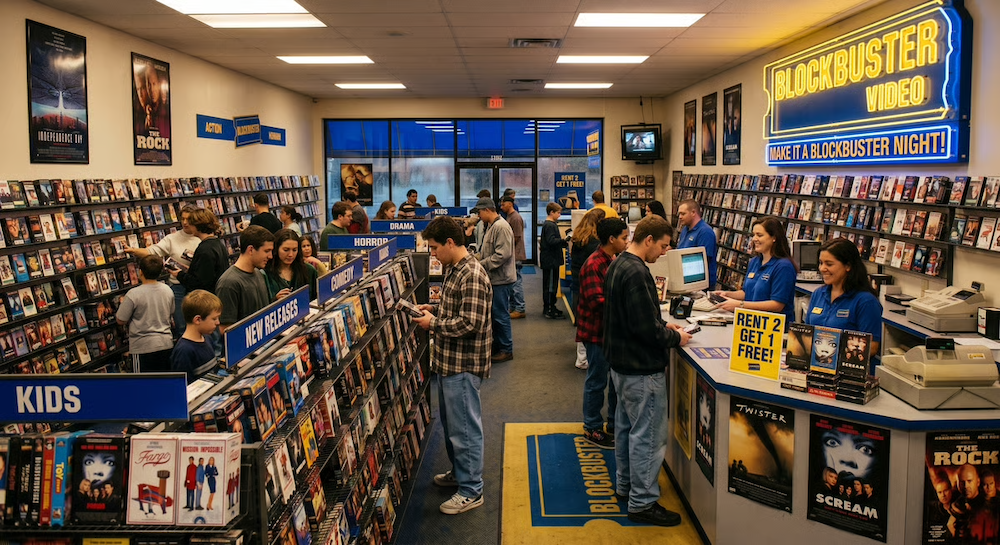
Stores That No Longer Exist Do People Miss Most
MarketBeat, a financial media company, surveyed 3,014 respondents (45+) to uncover which defunct chains Americans most want to see make a comeback.
What this data shows is that the connection people have to these brands goes beyond what they sell. Many of these stores turned everyday errands into actual experiences.”
SIOUX FALLS, SD, UNITED STATES, June 29, 2026 /EINPresswire.com/ -- There’s something uniquely powerful about the brands we grew up with, the places that weren’t just stores, but small rituals woven into everyday life. — Matt Paulson, founder of MarketBeat.
From Friday night trips to rent a movie to wandering the aisles of a favorite bookstore or toy shop, these experiences stuck.
MarketBeat, a financial media company, surveyed 3,014 respondents (45+) to uncover which defunct chains Americans most want to see make a comeback.
The top 10 were as follows:
#1 Blockbuster
No surprise that Blockbuster took the top spot. Blockbuster didn’t just rent movies — it owned Friday night. It was the place where indecision became a group sport, and you’d spend 40 minutes debating between a new release and something your friend swore was “actually good,” only to panic-grab both. The blue-and-yellow glow, the wall of new releases, the thrill of finding the last copy behind the box — it all felt like an event. Streaming may be easier, but it’s never quite matched the ritual, the anticipation, or the low-stakes drama of a Blockbuster run.
#2 Borders
Borders was more than a bookstore. It was somewhere you could disappear for a while. Bigger, brighter, and more open than most, it invited you to wander, sit down, and stay longer than you meant to. There was no rush, no pressure to buy — just the quiet promise that you might stumble across something interesting if you gave it enough time. In an era of quick clicks and shorter attention spans, that sense of space and possibility is what people miss most.
#3 Waldenbooks
Waldenbooks was the dependable mall companion — smaller, cozier, and always within reach. It didn’t try to overwhelm you; it just had enough of everything to make a quick visit feel worthwhile. You’d pop in between errands, scan a few shelves, and almost always leave with something you hadn’t planned on. It was simple, familiar, and easy to return to — the kind of place that quietly became part of your routine without ever needing to stand out.
#4 Hollywood Video
Hollywood Video was the slightly edgier cousin in the rental world — a bit less polished, a bit more chaotic, but often the place you went when the other store had nothing left. It had that underdog appeal, where you’d stumble across something unexpected simply because your first choice was gone. For a lot of people, it wasn’t just about the movies, but the last-minute pivot, the surprise pick, and the feeling that the best find was rarely the one you planned.
#5 Woolworth
Woolworth felt like a different era wrapped into a single store — part department store, part lunch counter, part everyday essential. You could pick up household items, grab a snack, and somehow feel like you were part of something just a little more old-fashioned and grounded. It had a rhythm, a slower pace that made even a short stop feel like a small outing. In a world of hyper-efficiency, Woolworth is remembered less for what it sold, and more for how it made everyday shopping feel a little more human.
#6 Hastings Entertainment
Hastings was a one-stop shop for just about every hobby, part bookstore, part record shop, part video store, part pop-culture rabbit hole. You’d go in for one thing and somehow end up losing an hour. It had a kind of chaotic charm to it, like a store built for people who still enjoyed browsing without a plan. For those who grew up with it, Hastings wasn’t just convenient — it became a local headquarters for movies, music, books, and boredom cures.
#7 Fry Electronics
Fry’s wasn’t just a store — it was an experience, usually somewhere between fascinating and occasionally overwhelming. One minute you were browsing cables, the next you were wandering through themed displays that felt more like a movie set than a shop. It had everything, often in excess, and somehow still felt like you might not find what you came for. But that was part of the appeal — the unpredictability, the scale, and the sense that you were stepping into a world built for people who loved tech a little too much.
#8 Marshall Field’s
Marshall Field’s had a sense of occasion that’s hard to replicate. Whether it was the grand interiors, the carefully presented displays, or the famous holiday windows, it made shopping feel like something more than a task. It carried a quiet elegance, the kind that didn’t need to shout to be noticed. For many, it was part of the city’s identity, a place tied to memories, traditions, and a slightly more refined way of doing things.
#9 Merry-Go-Round
Merry-Go-Round was peak mall energy — loud, trend-driven, and always chasing whatever was cool that minute. It was where fashion felt fast and a bit experimental, especially for teens trying to figure out their style in real time. You might not remember exactly what you bought, but you remember how it felt: trying things on with friends, second-guessing everything, and walking out feeling just a little more put together. It captured a moment in time when fashion was social, immediate, and unapologetically bold.
#10 Child World
Child World was the kind of place that made being a kid feel like an event. Walking through those doors felt like sensory overload in the best way, with aisles stacked high with toys you didn't even know existed yet. Everything felt bigger, brighter, and just barely out of reach, which somehow made it more exciting. For a lot of families, it was tied to birthdays, holidays, or "if you're lucky" moments — and that sense of anticipation is exactly what people feel is missing now.
https://www.marketbeat.com/originals/which-stores-that-no-longer-exist-do-people-miss-most/
“What this data shows is that the connection people have to these brands goes beyond what they sold,” says Matt Paulson, founder of MarketBeat. “Many of these stores turned everyday errands into actual experiences, whether that was picking out a movie, browsing without time pressure, or shopping with family."
Matt Paulson
MarketBeat.com
email us here
Visit us on social media:
LinkedIn
Instagram
Facebook
YouTube
Legal Disclaimer:
EIN Presswire provides this news content "as is" without warranty of any kind. We do not accept any responsibility or liability for the accuracy, content, images, videos, licenses, completeness, legality, or reliability of the information contained in this article. If you have any complaints or copyright issues related to this article, kindly contact the author above.
