

The Untapped Potential of Fatty Esters in Cold Chain Lubricants: A Hidden Driver of Market Growth, FMI Study
Fatty Esters Market
Fatty esters are emerging as eco-friendly lubricants in cold chain logistics, offering sustainability and performance benefits in low-temperature systems.
The growing adoption of fatty esters in cold chain lubricants signals a pivotal market shift, driven by green regulations and the need for efficient, biodegradable alternatives.”
NEWARK, DE, UNITED STATES, May 13, 2025 /EINPresswire.com/ -- 𝐈𝐧𝐭𝐫𝐨𝐝𝐮𝐜𝐭𝐢𝐨𝐧: 𝐑𝐞𝐭𝐡𝐢𝐧𝐤𝐢𝐧𝐠 𝐅𝐚𝐭𝐭𝐲 𝐄𝐬𝐭𝐞𝐫𝐬 𝐁𝐞𝐲𝐨𝐧𝐝 𝐂𝐨𝐬𝐦𝐞𝐭𝐢𝐜𝐬 𝐚𝐧𝐝 𝐅𝐨𝐨𝐝— Nikhil Kaitwade, Associate Vice President at Future Market Insights
The fatty esters market has long been associated with conventional sectors such as personal care, food additives, and industrial surfactants. While these applications dominate the market in volume and revenue share, there exists an underreported yet fast-emerging segment that could shape the future dynamics of the industry—cold chain lubricants. As global supply chains evolve under the dual pressures of environmental regulation and efficiency demands, fatty esters are finding renewed relevance as bio-lubricants for refrigeration systems and temperature-controlled logistics.
Most fatty esters market reports tend to focus on high-volume applications such as fatty acid methyl esters (FAME) used in biodiesel or the demand from emulsifiers in cosmetics. However, deeper exploration reveals that specialty esters, particularly those tailored for low-temperature functionality, are gaining traction in cold chain operations—an industry projected to grow significantly due to rising demand for frozen food, vaccines, and biologics.
𝐌𝐚𝐤𝐞 𝐈𝐧𝐟𝐨𝐫𝐦𝐞𝐝 𝐃𝐞𝐜𝐢𝐬𝐢𝐨𝐧𝐬 – 𝐀𝐜𝐜𝐞𝐬𝐬 𝐘𝐨𝐮𝐫 𝐒𝐚𝐦𝐩𝐥𝐞 𝐑𝐞𝐩𝐨𝐫𝐭 𝐈𝐧𝐬𝐭𝐚𝐧𝐭𝐥𝐲! https://www.futuremarketinsights.com/reports/sample/rep-gb-14714
𝐀 𝐂𝐥𝐨𝐬𝐞𝐫 𝐋𝐨𝐨𝐤 𝐚𝐭 𝐂𝐨𝐥𝐝 𝐂𝐡𝐚𝐢𝐧 𝐋𝐮𝐛𝐫𝐢𝐜𝐚𝐧𝐭𝐬: 𝐖𝐡𝐲 𝐒𝐮𝐬𝐭𝐚𝐢𝐧𝐚𝐛𝐢𝐥𝐢𝐭𝐲 𝐌𝐚𝐭𝐭𝐞𝐫𝐬
Cold chain logistics rely heavily on refrigeration compressors and transport systems that must operate under extreme temperature differentials, often requiring high-performance lubricants to maintain system integrity and energy efficiency. Traditionally, these lubricants have been mineral oil-based, with significant environmental downsides such as high toxicity, poor biodegradability, and disposal concerns.
As the global cold chain industry integrates more sustainable practices, driven in part by green supply chain mandates and ESG (Environmental, Social, and Governance) criteria, there is a growing interest in biodegradable, low-toxicity alternatives. Fatty esters, derived from natural fatty acids and alcohols, offer a viable solution. Their intrinsic properties such as excellent lubricity, high viscosity index, and low pour points make them particularly suited for cold-temperature applications.
A study published in Industrial Lubrication and Tribology (2023) highlighted how esters like isopropyl myristate and oleyl oleate significantly outperform traditional oils in thermal stability and lubricity in sub-zero conditions. These findings are spurring interest among cold chain equipment manufacturers to explore fatty esters as base stocks for synthetic refrigeration lubricants.
𝐓𝐡𝐞 𝐒𝐜𝐢𝐞𝐧𝐜𝐞 𝐁𝐞𝐡𝐢𝐧𝐝 𝐅𝐚𝐭𝐭𝐲 𝐄𝐬𝐭𝐞𝐫𝐬 𝐢𝐧 𝐋𝐨𝐰-𝐓𝐞𝐦𝐩𝐞𝐫𝐚𝐭𝐮𝐫𝐞 𝐋𝐮𝐛𝐫𝐢𝐜𝐚𝐭𝐢𝐨𝐧
Fatty esters exhibit molecular flexibility and polarity that enhance their interaction with metal surfaces, reducing wear and tear in refrigeration compressors. Their chemical structure can be customized by varying the carbon chain length or introducing branching, making them versatile for a range of viscosities and temperature behaviors.
For instance, medium-chain fatty acid esters like isooctyl stearate are known for their excellent oxidative stability and pour points as low as -40°C, which makes them ideal for mobile cold chain vehicles. Furthermore, fatty acid methyl esters (FAME) have been successfully blended with polyol esters to create hybrid lubricants with both biodegradability and performance advantages.
𝐔𝐧𝐥𝐨𝐜𝐤 𝐂𝐨𝐦𝐩𝐫𝐞𝐡𝐞𝐧𝐬𝐢𝐯𝐞 𝐌𝐚𝐫𝐤𝐞𝐭 𝐈𝐧𝐬𝐢𝐠𝐡𝐭𝐬 – 𝐄𝐱𝐩𝐥𝐨𝐫𝐞 𝐭𝐡𝐞 𝐅𝐮𝐥𝐥 𝐑𝐞𝐩𝐨𝐫𝐭 𝐍𝐨𝐰: https://www.futuremarketinsights.com/reports/fatty-esters-market
These innovations not only improve operational efficiency but also align with environmental goals, particularly in industries like pharmaceuticals, where contamination from mineral oils is unacceptable. The low toxicity and high biodegradability of fatty esters also reduce the risk of environmental damage in the event of a leak or system failure.
𝐆𝐥𝐨𝐛𝐚𝐥 𝐑𝐞𝐠𝐮𝐥𝐚𝐭𝐨𝐫𝐲 𝐌𝐨𝐦𝐞𝐧𝐭𝐮𝐦: 𝐄𝐮𝐫𝐨𝐩𝐞 𝐚𝐧𝐝 𝐀𝐏𝐀𝐂 𝐚𝐬 𝐅𝐢𝐫𝐬𝐭 𝐌𝐨𝐯𝐞𝐫𝐬
Policy shifts in regions like Europe and Asia-Pacific are reinforcing the demand for sustainable chemical solutions. The European Union’s REACH regulation and the upcoming Green Deal targets are pressuring manufacturers to eliminate harmful substances from industrial processes, including cold chain maintenance. Similarly, Japan and South Korea have introduced tax incentives for the use of bio-based and biodegradable lubricants in industrial applications.
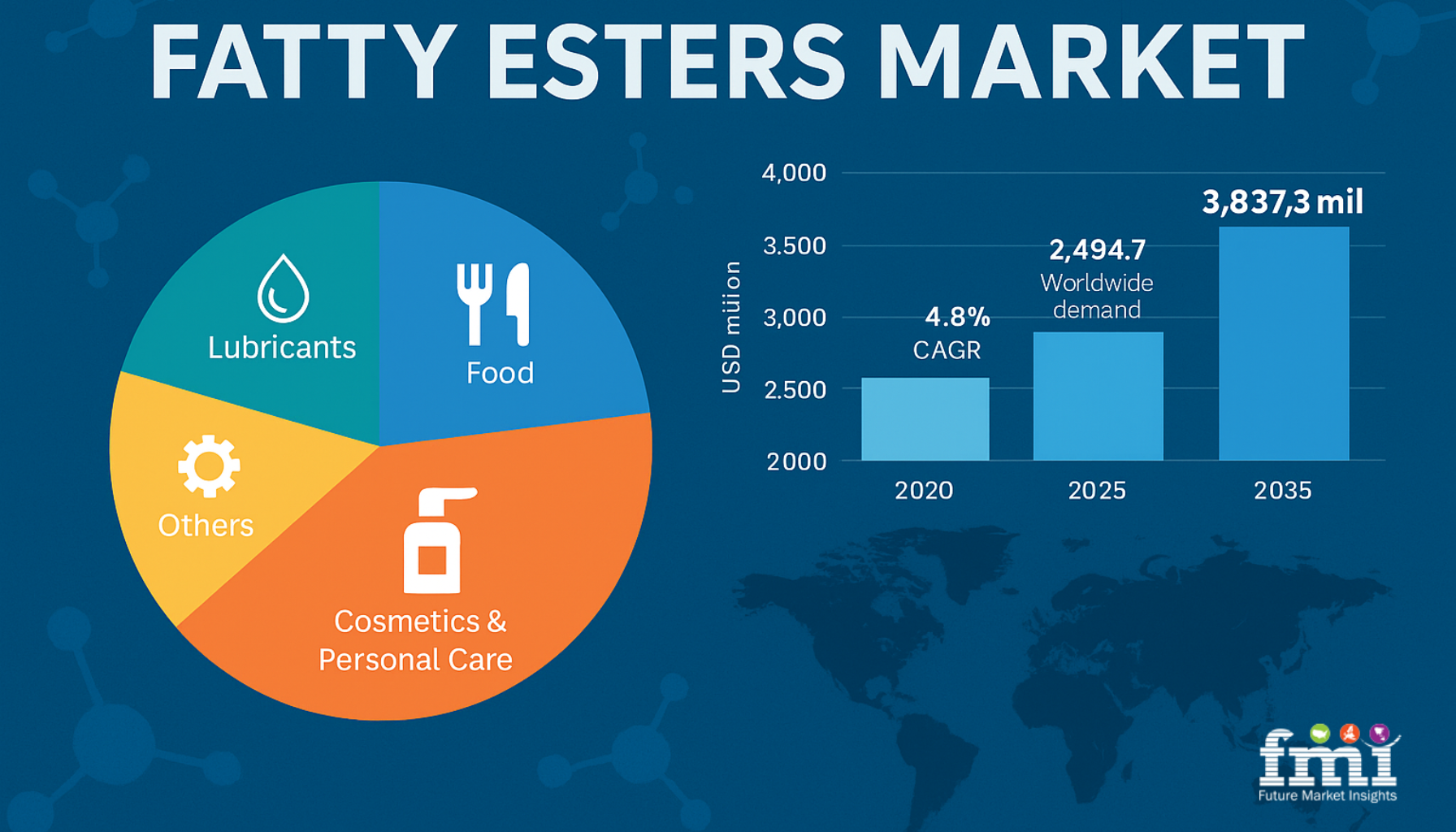
These developments are being mirrored in corporate procurement strategies. Major logistics and food distribution firms in Germany, the Netherlands, and Japan have begun specifying “environmentally acceptable lubricants (EALs)” in their cold chain equipment tenders, creating an unexpected growth window for specialty esters. According to Future Market Insights (FMI), the global fatty esters market reached USD 2,011.5 million in 2020. Worldwide demand for fatty esters saw a 4.8% year-on-year growth in 2025, suggesting an expansion of the market to USD 2,494.7 million in 2025. Projections for the period between 2025 and 2035 indicate a 4.4% compound annual growth rate (CAGR) for global fatty esters sales, resulting in a market size of USD 3,837.3 million by the end of 2035.
As sustainability becomes a non-negotiable priority in cross-border food and pharmaceutical trade, the adoption of green lubricants in cold chains is no longer a fringe concept but a practical necessity.
𝐌𝐚𝐫𝐤𝐞𝐭 𝐈𝐦𝐩𝐥𝐢𝐜𝐚𝐭𝐢𝐨𝐧𝐬 𝐚𝐧𝐝 𝐅𝐮𝐭𝐮𝐫𝐞 𝐎𝐮𝐭𝐥𝐨𝐨𝐤 𝐟𝐨𝐫 𝐒𝐩𝐞𝐜𝐢𝐚𝐥𝐭𝐲 𝐅𝐚𝐭𝐭𝐲 𝐄𝐬𝐭𝐞𝐫𝐬
While bio-lubricants currently make up a small fraction of the fatty esters market, their CAGR is projected to exceed that of more traditional applications. A recent market study on "fatty acid esters market growth by application" identified the cold chain lubricant segment as a potential disruptor, particularly given the tightening regulations and rising consumer scrutiny around sustainable sourcing.
Manufacturers specializing in FAME production are beginning to diversify into high-value esters for lubrication, signaling a strategic pivot in product portfolios. Additionally, partnerships between lubricant formulators and biotechnology firms are accelerating R&D in this niche, potentially leading to patented formulations that deliver both performance and compliance advantages.
As awareness grows, future fatty esters market reports will need to broaden their analytical lens beyond just cosmetics, biodiesel, and food emulsifiers. The integration of fatty esters into cold chain lubrication represents not just a technical innovation but a paradigm shift in how natural chemistry can enable greener supply chains.
𝐇𝐲𝐝𝐫𝐨𝐜𝐚𝐫𝐛𝐨𝐧𝐬, 𝐏𝐞𝐭𝐫𝐨𝐜𝐡𝐞𝐦𝐢𝐜𝐚𝐥𝐬, 𝐚𝐧𝐝 𝐎𝐫𝐠𝐚𝐧𝐢𝐜 𝐂𝐡𝐞𝐦𝐢𝐜𝐚𝐥𝐬: https://www.futuremarketinsights.com/industry-analysis/hydrocarbons-petrochemicals-and-organic-chemicals
𝐊𝐞𝐲 𝐒𝐞𝐠𝐦𝐞𝐧𝐭𝐚𝐭𝐢𝐨𝐧
By Product Type:
The Product Type segment is further categorized into Methyl Ethers, Glycerol Ethers, Polyol Esters, Sorbitan Esters, Medium-Chain Triglycerides (MCTs), Isopropyl Esters and Ethyl Esters.
By End Use:
The End Use segment is classified into Combustion fuel, Home & Industrial Care, Cosmetics & Personal Care, Pharmaceuticals & Nutraceuticals, Agrochemicals, Others (Rubber, Plastic, Textile, etc.).
By Region:
Regions considered in the study include North America, Latin America, Western Europe, Eastern Europe, East Asia, South Asia & Pacific, and the Middle East and Africa.
𝐑𝐞𝐥𝐚𝐭𝐞𝐝 𝐑𝐞𝐩𝐨𝐫𝐭𝐬:
Tris Nonylphenyl Phosphite Market: https://www.futuremarketinsights.com/reports/tris-nonylphenyl-phosphite-market
Natural Cinnamic Aldehyde Market: https://www.futuremarketinsights.com/reports/natural-cinnamic-aldehyde-market
Cyclic Ketones Market: https://www.futuremarketinsights.com/reports/cyclic-ketones-market
Cetrimonium Bromide Market: https://www.futuremarketinsights.com/reports/cetrimonium-bromide-market
Caryophyllene Market: https://www.futuremarketinsights.com/reports/caryophyllene-market
𝐀𝐛𝐨𝐮𝐭 𝐅𝐮𝐭𝐮𝐫𝐞 𝐌𝐚𝐫𝐤𝐞𝐭 𝐈𝐧𝐬𝐢𝐠𝐡𝐭𝐬 (𝐅𝐌𝐈)
Future Market Insights, Inc. (ESOMAR certified, recipient of the Stevie Award, and a member of the Greater New York Chamber of Commerce) offers profound insights into the driving factors that are boosting demand in the market. FMI stands as the leading global provider of market intelligence, advisory services, consulting, and events for the Packaging, Food and Beverage, Consumer Technology, Healthcare, Industrial, and Chemicals markets. With a vast team of over 400 analysts worldwide, FMI provides global, regional, and local expertise on diverse domains and industry trends across more than 110 countries.
Join us as we commemorate 10 years of delivering trusted market insights. Reflecting on a decade of achievements, we continue to lead with integrity, innovation, and expertise.
𝐂𝐨𝐧𝐭𝐚𝐜𝐭 𝐔𝐬:
Future Market Insights Inc.
Christiana Corporate, 200 Continental Drive,
Suite 401, Newark, Delaware - 19713, USA
T: +1-347-918-3531
For Sales Enquiries: sales@futuremarketinsights.com
Website: https://www.futuremarketinsights.com
LinkedIn| Twitter| Blogs | YouTube
Ankush Nikam
Future Market Insights Global & Consulting Pvt. Ltd.
+ +91 90966 84197
email us here
Visit us on social media:
Other
Legal Disclaimer:
EIN Presswire provides this news content "as is" without warranty of any kind. We do not accept any responsibility or liability for the accuracy, content, images, videos, licenses, completeness, legality, or reliability of the information contained in this article. If you have any complaints or copyright issues related to this article, kindly contact the author above.
