

EV Wireless Power Transfer Market set for steady growth for US$ 3,718.7 million by 2030 at a CAGR of 97.1%.
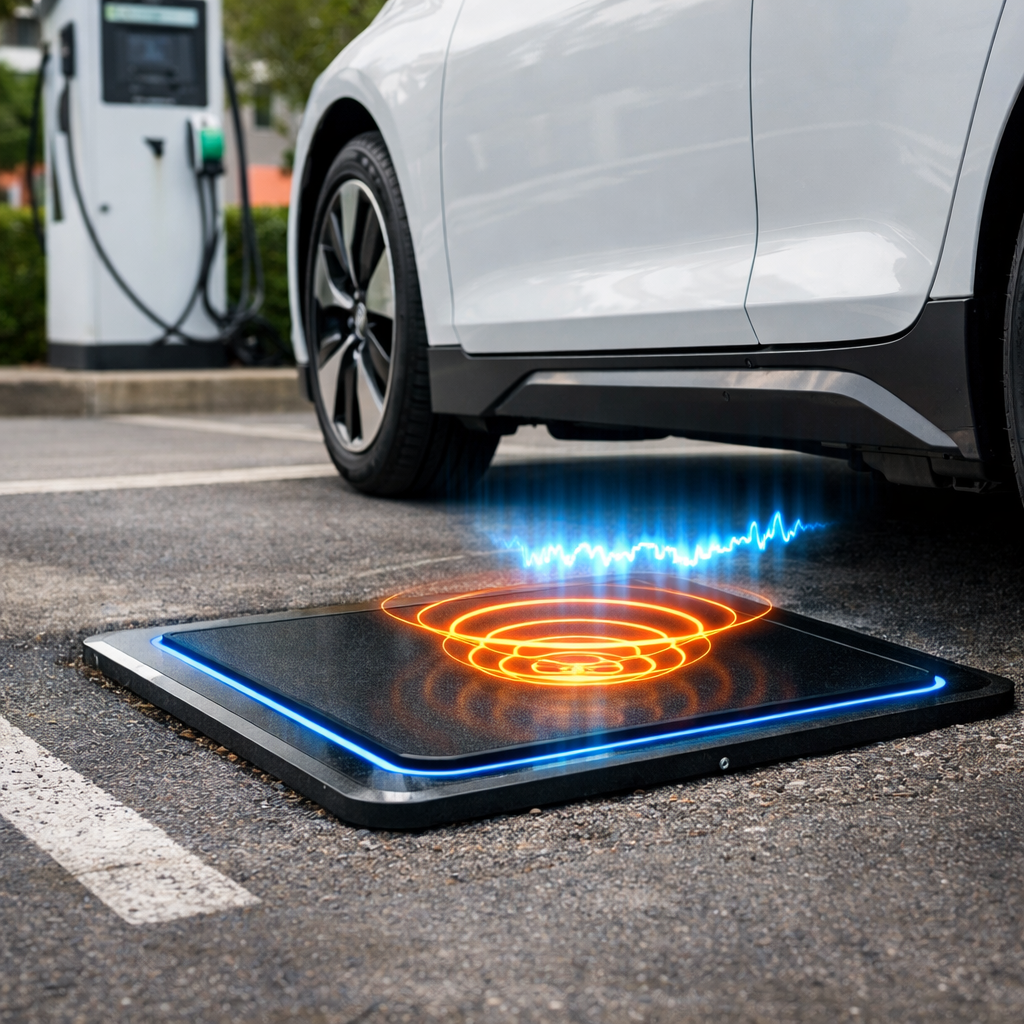
EV Wireless Power Transfer market is gaining traction as automakers adopt contactless charging to improve convenience, safety, and shared mobility ecosystems.
Wireless EV charging will move from pilot projects to mainstream adoption as efficiency improves and standards mature, making seamless, automated charging a key enabler of future smart mobility.”
AUSTIN, TX, UNITED STATES, December 18, 2025 /EINPresswire.com/ -- Global EV Wireless Power Transfer Market reached US$ 16.3 million in 2022 and is expected to reach US$ 3,718.7 million by 2030, growing with a CAGR of 97.1% during the forecast period 2023-2030.— DataM Intelligence
Market growth is driven by the rapid adoption of electric vehicles, increasing demand for convenient and cable-free charging solutions, and growing focus on user-friendly charging infrastructure. Additionally, advancements in inductive charging technologies, rising investments in smart mobility and autonomous vehicles, expanding deployment of wireless charging pads in public and residential spaces, and supportive government initiatives for EV infrastructure development are further supporting market expansion.
Get a Free Sample PDF Of This Report (Get Higher Priority for Corporate Email ID):-https://www.datamintelligence.com/download-sample/ev-wireless-power-transfer-market
United States: Key Industry Developments
◾ October 2025: WiTricity expanded partnerships with Ford for wireless power transfer integration in the Mustang Mach-E, enabling 11 kW dynamic charging capabilities that reduce downtime by 40% for fleet operations in urban California hubs.
◾ September 2025: Tesla announced upgrades to its proprietary EV wireless charging pads for Model 3 and Cybertruck, featuring improved efficiency up to 95% and compatibility with public infrastructure pilots.
◾ August 2025: The U.S. Department of Energy funded Dallas/Fort Worth Airport's ZiGGY autonomous robotic wireless charger demos, showcasing seamless parking lot integration for traveler EVs.
Asia Pacific /Japan: Key Industry Developments
◾ September 2025: Toyota launched wireless EV charging infrastructure for public and private fleets in Tokyo urban areas, emphasizing 85% grid efficiency and reduced congestion for high-density commuting.
◾ August 2025: Nissan expanded its wireless power transfer tech for in-motion and stationary charging in commercial vans, targeting 20% faster range extension in Yokohama pilot deployments.
◾ June 2025: The EV Wireless Power Transfer Council, formed by Japanese automakers, standardized protocols for interoperable systems, accelerating adoption in national highway networks.
Key Merges and Acquisitions(2025):-
◾ Electreon Wireless Ltd. (19 Nov 2025) signed a Memorandum of Understanding to acquire the assets of InductEV, combining Electreon’s dynamic in-road and stationary wireless charging platforms with InductEV’s ultra-fast static systems to create a single, broader wireless EV-charging product lineup and expand scale for fleets and heavy vehicles.
Market Segmentation Analysis:-
By Technology Type
Inductive coupling leads the EV wireless power transfer market with approximately 30.42% share in 2025, driven by its efficiency in short-range charging for stationary EVs and integration in consumer electronics like smartphones that pave the way for automotive adoption.
Near-field technology dominates broader wireless power transmission at 61.3% in 2025, favored for stable energy transfer with minimal losses, particularly suited for EV parking spot chargers.
Magnetic resonance coupling grows fastest, offering mid-range flexibility for dynamic charging scenarios on roads.
By Product/Implementation
Static charging systems hold the largest share, around 70-80% implicitly through inductive dominance, as they support overnight home and depot charging with higher efficiency for parked vehicles.
Dynamic charging trails at under 30%, enabling on-the-move power transfer but limited by infrastructure costs and lower maturity.
Mobile charging pads, while minor for EVs, contribute via 57.8% in related consumer segments, influencing portable EV solutions.
By Application/End-Use
Consumer electronics lead at 28.7% overall wireless power share in 2025, with EVs as a fast-growing subset fueled by global sales exceeding 12 million units annually.
Electric vehicles specifically account for rising portions, with the wireless EV charging market at USD 107.58 million in 2025, emphasizing stationary and highway applications.
Industrial and automotive sectors follow, boosted by renewable integration and off-grid needs.
Purchase this report before year-end and unlock an exclusive 30% discount:https://www.datamintelligence.com/buy-now-page?report=ev-wireless-power-transfer-market (Purchase 2 or more Reports and get 50% Discount)
Growth Drivers:-
1. Rapid Growth in Electric Vehicle (EV) Adoption:-
The primary driver is the global surge in EV adoption. As more consumers, commercial fleets, and governments transition to electric mobility to reduce emissions and fuel costs, demand for convenient charging solutions like wireless power transfer is increasing significantly. Wireless charging eliminates the need for physical cables, aligning with user preferences for seamless and user-friendly solutions.
2. Convenience and Enhanced User Experience:-
Wireless EV charging offers hands-free, plug-free charging, which is highly appealing to consumers. Drivers simply park over a charging pad without plugging in cables this convenience is especially attractive for residential and public parking environments.
3. Smart Infrastructure and Urbanization Trends:-
Urbanization and smart city development are encouraging the deployment of wireless charging infrastructure in commercial spaces, parking lots, and city roads. Integrating wireless charging into smart traffic and energy systems supports connected mobility and efficient urban planning.
4. Government Policies, Regulations & Incentives:-
Supportive government initiatives, subsidies, and policies aimed at expanding EV infrastructure are catalyzing market growth. Many countries include wireless charging in broader EV incentive programs, boosting investments and pilot projects.
5. Technological Advancements:-
Continuous innovation in wireless power transfer technologies including inductive power transfer, magnetic resonance, and dynamic (in-motion) charging is improving charging efficiency, reducing system costs, and enhancing interoperability with different EV models.
6. OEM and Industry Collaboration:-
Growing partnerships between automakers and wireless charging technology providers accelerate market adoption. OEM integration of wireless charging systems in new EV models increases consumer exposure and confidence.
7. Fleet & Commercial Vehicle Adoption:-
Electric fleets such as buses, delivery vans, and ride-hailing vehicles benefit from reduced downtime and lower maintenance costs with wireless charging, making it an attractive solution for commercial deployments. These use cases are driving demand beyond private passenger vehicles.
8. Sustainability & Low-Emission Goals:-
Environmental concerns and corporate/government commitments to carbon reduction encourage the deployment of technologies that support the broader EV ecosystem. Wireless power transfer aligns with goals for cleaner, more efficient transport infrastructures.
Regional Insights:-
North America commands the largest share of the EV Wireless Power Transfer Market, estimated at around 38.5% in recent assessments, driven by advanced R&D investments, strong EV ecosystem with players like WiTricity, and supportive infrastructure policies in the US and Canada.
Europe follows as the second-largest region, benefiting from stringent emissions regulations, rising EV adoption in countries like Germany, France, and the UK, and advancements in commercial vehicle charging, though exact shares vary amid ongoing infrastructure expansions.
Asia Pacific ranks third in market share, yet exhibits the fastest growth potential with high CAGRs in nations such as China, India, Japan, and South Korea, fueled by massive EV production, government subsidies, and rapid smart city developments.
Speak to Our Analyst and Get Customization in the report as per your requirements:https://www.datamintelligence.com/customize/ev-wireless-power-transfer-market
Key Players:-
WiTricity Corporation, Qualcomm Halo, Plugless (Evatran Group), Momentum Dynamics Corporation, Bombardier Primove, Hella Aglaia Mobile Vision GmbH, HEVO Inc., Electreon Wireless, Groupe Renault and BMW GROUP.
Key Highlights (Top 5 Key Players) for Automotive logistics Market :
Pioneers resonant magnetic charging for EVs, powering passenger and commercial vehicles with high-efficiency, SAE/ISO-compliant systems; partners include Siemens and Japanese OEMs.
Qualcomm Halo :- Develops inductive wireless charging tech for EVs, now integrated into WiTricity; focuses on dynamic charging viability and scalable infrastructure for fleets.
Plugless (Evatran Group):-Offers aftermarket inductive wireless chargers like Plugless Power for easy home EV charging; emphasizes user-friendly, SAE J2954-compliant kits for various models.
Momentum Dynamics Corporation:- Specializes in high-power dynamic wireless charging for buses and fleets; enables opportunity charging during operation with robust, weather-resistant systems.
Electreon Wireless:- Provides in-road dynamic wireless charging for EVs, powering vehicles while driving; deployed in pilot projects globally for public transport and highways.
Unlock 360° Market Intelligence with DataM Subscription Services: https://www.datamintelligence.com/reports-subscription
Power your decisions with real-time competitor tracking, strategic forecasts, and global investment insights all in one place.
Conclusion:-
The EV Wireless Power Transfer Market is rapidly evolving, driven by growing EV adoption, advancements in resonant and inductive charging technologies, and demand for convenient, cable-free charging. Strong pilot deployments, automaker partnerships, and supportive policies position wireless charging as a transformative enabler of future smart mobility ecosystems.
Related Reports:-
1. Fuel Cell Powertrain Market
2. Automotive Semiconductor Market
Sai Kiran
DataM Intelligence 4Market Research
+1 877-441-4866
email us here
Visit us on social media:
LinkedIn
X
Legal Disclaimer:
EIN Presswire provides this news content "as is" without warranty of any kind. We do not accept any responsibility or liability for the accuracy, content, images, videos, licenses, completeness, legality, or reliability of the information contained in this article. If you have any complaints or copyright issues related to this article, kindly contact the author above.
